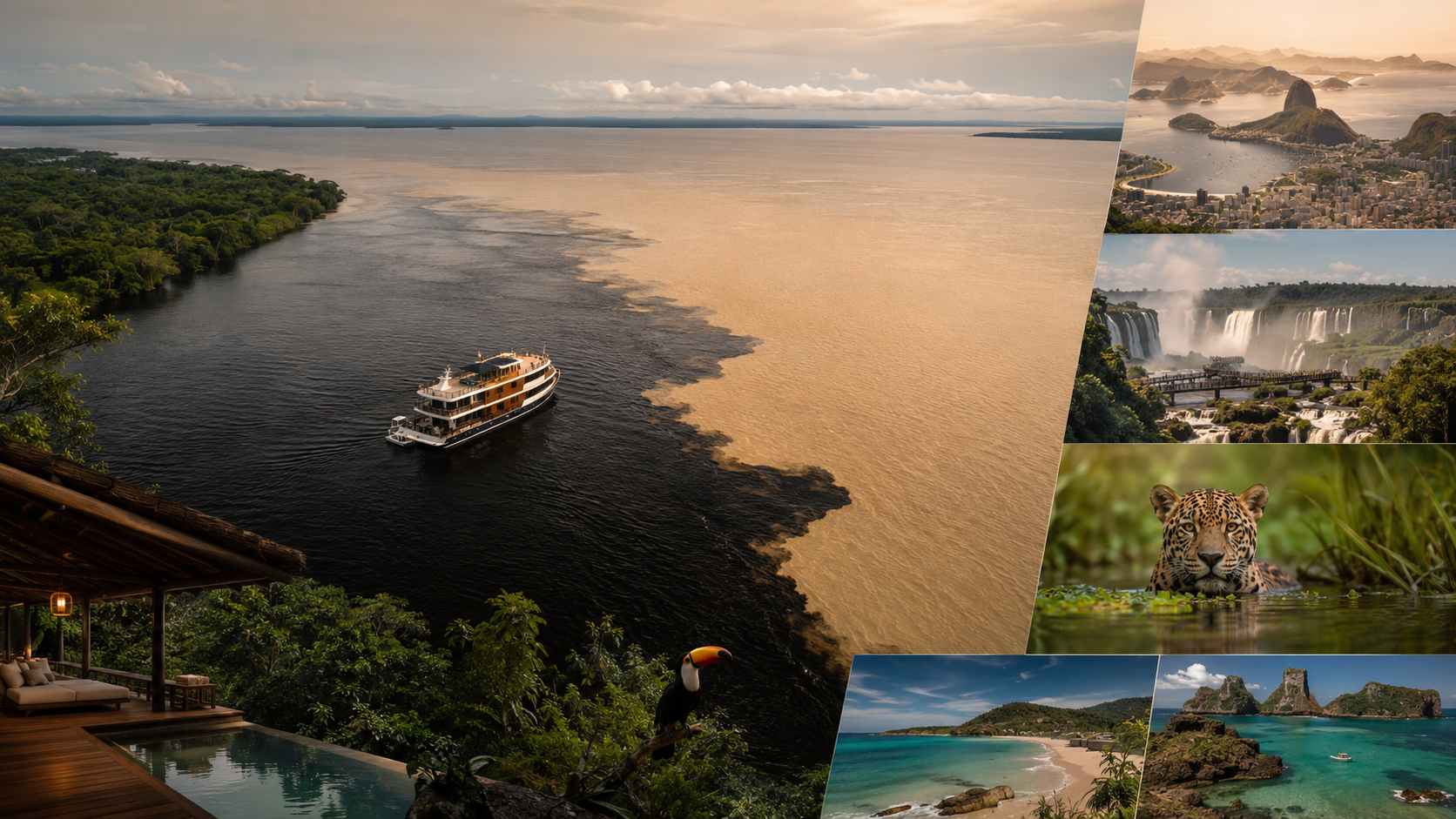
The Meeting of the Waters in the Amazon is one of the most fascinating natural phenomena near Manaus, where the dark waters of the Rio Negro meet the sandy-colored waters of the Rio Solimões and flow side by side before forming the Amazon River.
It is a scene that feels almost impossible until you see it in person: two rivers, two colors, two temperatures, two speeds, and one unforgettable border drawn by nature itself. For travelers visiting the Brazilian Amazon, this is not just a quick boat stop. It is a powerful introduction to how the rainforest works, how the rivers shape life, and why the Amazon is best understood from the water.
If there is a natural spectacle that deserves to be witnessed at least once in a lifetime, this is one of them. The meeting of the dark, calm waters of the Negro with the muddy, energetic waters of the Solimões is both visually striking and deeply symbolic. It looks like two different worlds coming together in a slow, mysterious dance.
What is the Meeting of the Waters in the Amazon?
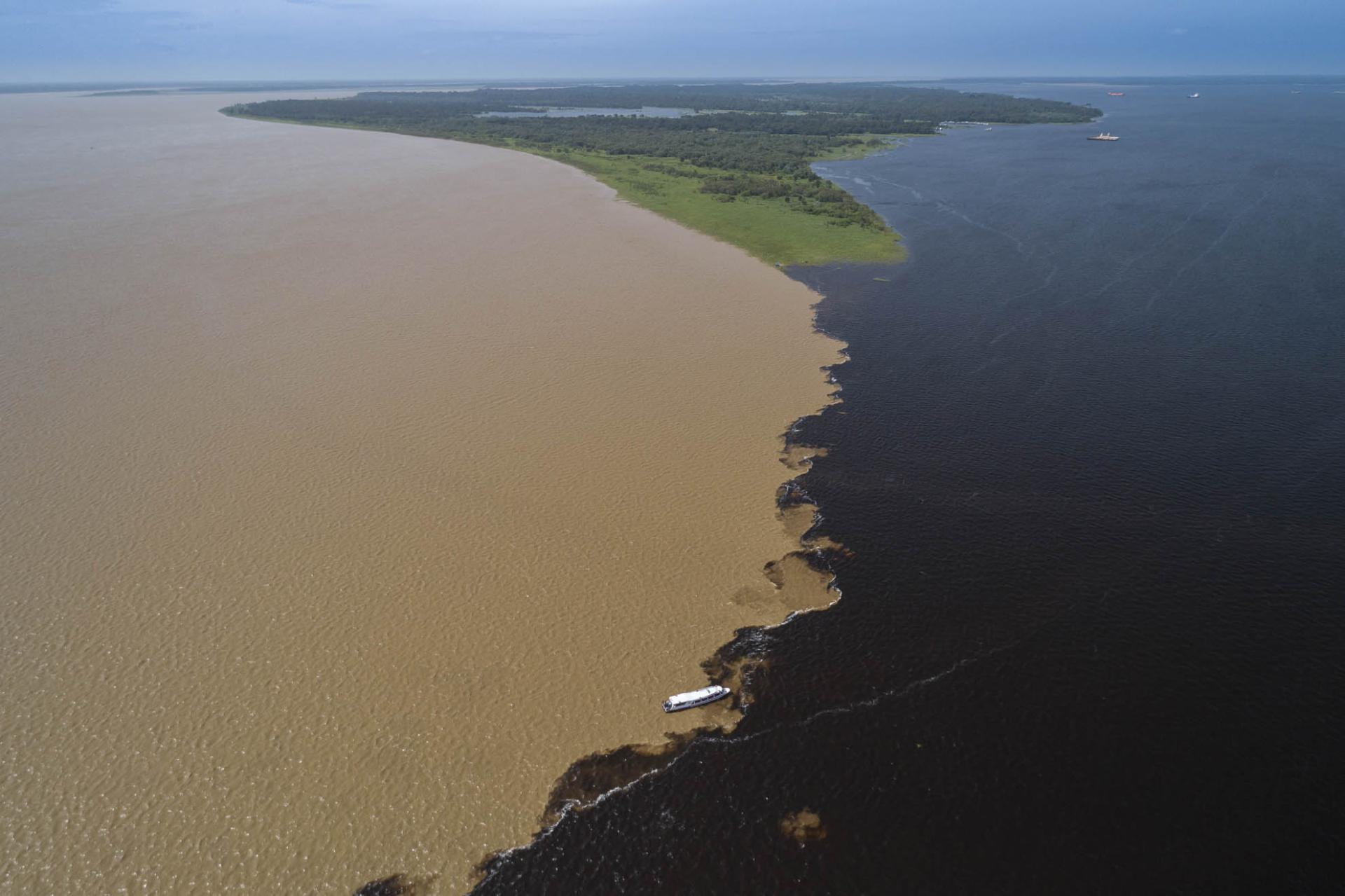
The Meeting of the Waters in the Amazon is the famous confluence near Manaus where the Rio Negro and the Rio Solimões run side by side for several kilometers without immediately mixing. The contrast is easy to see: one river is dark, almost black, while the other is lighter, brown, and full of sediment.
The Rio Negro gets its dark color from organic matter released by decomposing vegetation. Its waters are warmer, more acidic, and slower. The Rio Solimões, on the other hand, carries sediments from the Andes Mountains, giving it a muddy, sandy tone. It is cooler and moves faster.
Together, they form one of the most iconic images of the Amazon: the blackwater Rio Negro and the whitewater Solimões flowing side by side before becoming the Amazon River.
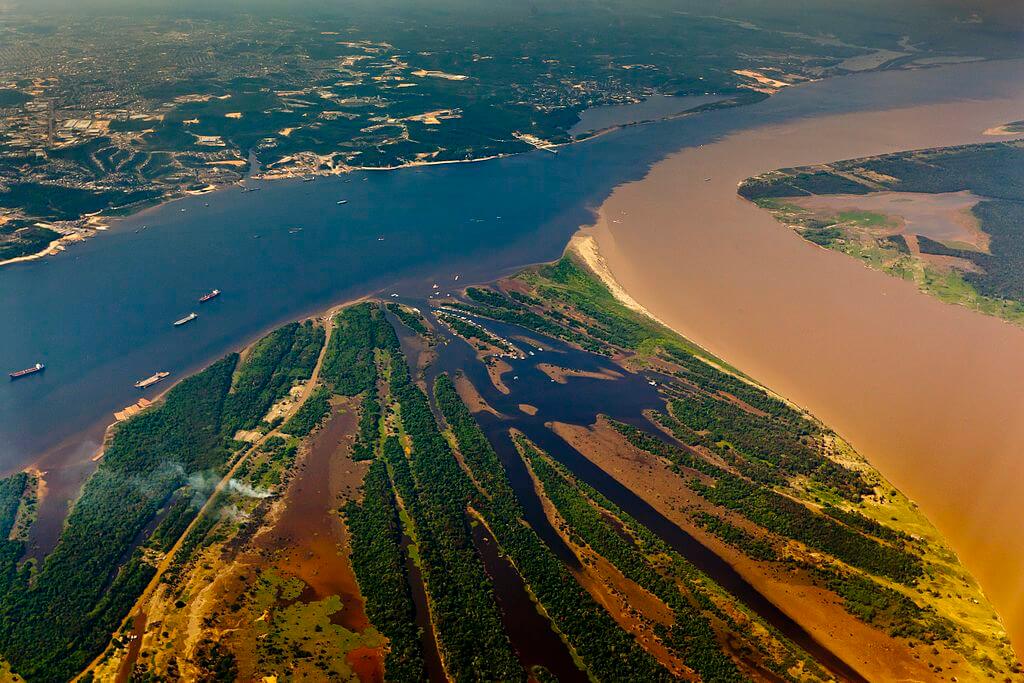
The Rio Solimões meets the Rio Negro near Manaus, forming the Amazon River and creating one of the region’s most recognizable natural landmarks.
Why do the Rio Negro and Rio Solimões not mix immediately?
The phenomenon happens because the two rivers have very different physical and chemical characteristics. Their temperature, velocity, density, acidity, and sediment load are not the same, so the waters do not blend as soon as they meet.
The Rio Negro is generally warmer and slower, flowing at around 2 km/h at approximately 28 °C. The Rio Solimões is cooler and faster, moving between 4 and 6 km/h at around 22 °C. These differences help maintain the visible separation between the two rivers for about 6 kilometers.
From a boat, the effect is unforgettable. On one side, the dark and calm waters of the Negro. On the other, the muddy and more turbulent Solimões. Between them, a natural line that seems drawn across the river.
This natural phenomenon has even been observed from space by NASA Earth Observatory, which documented the unusual meeting patterns between the Rio Negro and the Rio Solimões near Manaus.
Where is the Meeting of the Waters?
The Meeting of the Waters is located near Manaus, the capital of Amazonas state and one of the main gateways to the Brazilian Amazon. Manaus sits close to the confluence of these two great rivers, which makes the phenomenon one of the most accessible and important experiences for travelers arriving in the region.
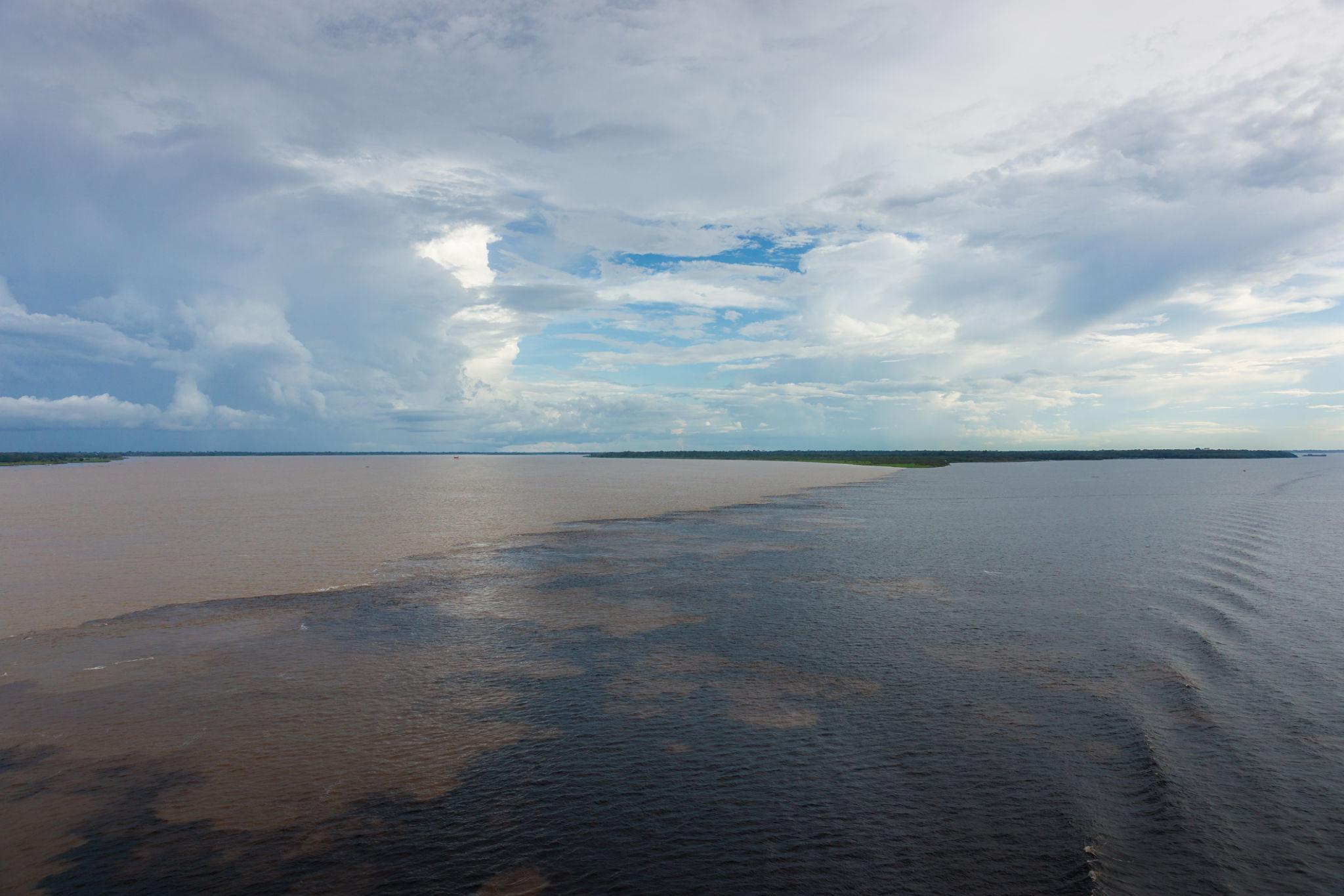
Most visitors reach the site by boat. Depending on the itinerary, the experience may be part of a half-day tour, a private Amazon boat tour, or a broader rainforest journey including river communities, floating houses, wildlife observation, giant water lilies, and forest immersion.
How to visit the Meeting of the Waters from Manaus
There are regular boat tours from Manaus to the Meeting of the Waters. Some departures leave from the floating port area or nearby river terminals, and many tours combine the phenomenon with other nearby stops. For travelers who want comfort, safety, and a richer interpretation of the region, a private guide makes a major difference.
A private Amazon tour is not only about avoiding crowds. It allows the pace to be adjusted, the explanations to be deeper, and the route to be designed around the traveler’s interests. The Amazon is vast, and what may look simple on a map depends on water levels, weather, timing, navigation, and local knowledge.
At Brazil on Foot, the Meeting of the Waters in the Amazon can be included in a tailor-made itinerary that connects Manaus, river journeys, forest lodges, wildlife experiences, and cultural encounters with local communities. Please click here to talk to a travel designer.
What can you see during the boat ride?
The meeting itself is the highlight, but the boat ride can reveal much more of the Amazon’s rhythm. Depending on the route and the season, travelers may see exotic birds, river dolphins, sloths, alligators, floating houses, riverside communities, and wide river landscapes that show the scale of the rainforest.
This is one of the reasons the experience works so well as an introduction to the Amazon. It is visual, educational, accessible from Manaus, and deeply connected to the way people move through the region. In the Amazon, rivers are not just scenery. They are roads, borders, food sources, stories, and lifelines.
Best time to visit the Meeting of the Waters in the Amazon
The Meeting of the Waters in the Amazon can be visited year-round, but the experience changes with the seasons.
During the dry season, usually from June to November, water levels in the Amazon Basin tend to be lower. This can make the contrast between the Rio Negro and the Rio Solimões appear more pronounced, creating a particularly striking visual effect. Lower water levels may also make it easier to explore certain smaller tributaries and surrounding areas.
During the wet season, from December to May, water levels rise and the surrounding landscapes become more immersive. While the contrast between the rivers can sometimes appear softer, this period can be excellent for exploring flooded forests, observing wildlife, and experiencing the Amazon in a more expansive way. The wet season is also associated with abundant fruiting trees and increased bird activity, making it especially interesting for birdwatching enthusiasts.
There is no single perfect month for every traveler. The best time depends on what you want most: stronger visual contrast, photography, wildlife, flooded forest immersion, birdwatching, comfort, or a broader Amazon itinerary.
Is the Meeting of the Waters worth visiting?
Yes. The Meeting of the Waters in the Amazon is absolutely worth visiting, especially for travelers who want to understand the Amazon beyond the idea of a generic rainforest.
It is not only a beautiful view. It is a lesson in geography, ecology, scale, and time. It shows how different rivers carry different stories: one shaped by dark organic matter from the forest, the other by sediments that traveled from the Andes. When they meet, the Amazon becomes visible as a living system.
For many travelers, this becomes one of the most memorable moments of an Amazon journey. It is simple in structure—a boat, two rivers, one horizon—but powerful in meaning.
How Brazil on Foot can include it in your Amazon journey
The Meeting of the Waters can be included as part of a private Amazon itinerary designed around comfort, safety, and depth. Instead of treating it as a quick photo stop, we can connect the experience with expert guiding, river navigation, wildlife observation, local culture, and carefully selected lodges.
This journey can also be combined with Rio de Janeiro, Iguazu Falls, Pantanal, Florianópolis, or Fernando de Noronha for travelers who want to discover Brazil through nature, culture, and tailor-made private experiences.
Planning a trip to the Amazon? Brazil on Foot can design a journey that includes the Meeting of the Waters in the Amazon with the right guides, timing, logistics, and comfort for the way you want to travel. Please click here to talk to a travel designer.